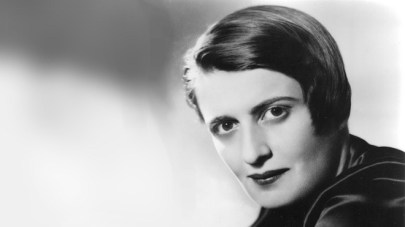
 When Paul Ryan appeared on the Republican ticket last fall, two familiar words burst onto the scene like popcorn: Ayn Rand.
Like for many others, Ayn Rand burst into my life at 19, and I lapped up her entire cannon like a plate of cream. Twice. But the world has changed a lot since I fell for the ideal of hyper-individualism.
It’s not that the Internet Age proves she got it wrong. In fact, it shows that Ayn Rand got a whole lot right. She said the human will is amazing and that freedom and opportunity make it flourish.
Working in social technology, I see how right she was. There’s a deep passion for human ingenuity in this business. Where the stakes are high, the talent is top notch and the work product is fantastic.
Yet there’s another group that plays just as important a role in the Information Age: The crowd.
I can’t help but wonder what Ayn Rand would have to say about the phenomenon of crowdsourcing where the work product comes from an undefined group of mostly (pardon my language, Ayn) volunteers?
Crowdsourcing is the process of tapping the collective for ideas. Turns out, the collective gives them up like gumballs, asks little or nothing in return, and before you know it we have wonderful things like Apache Software and Wikipedia.
The Internet Age shows us what Ayn Rand would call an irrational force—the desire to serve—rocks! I can get Wikipedia on my iPhone instantly for free. The Encyclopedia Britannica, before it went out of print, was cumbersome, expensive, and made the book shelves sag.
When Ayn Rand asks who should benefit from our output, she offers two choices: You or me. Today’s answer is both. The power of the crowd is proof. Sometimes providing value for others is personal gain.
I’d like to think a John Galt of this century would have been among the first to spot the power of the crowd. He dedicated his life, after all, to the pursuit of an inexhaustible supply of cheap energy.
This article was originally aired as a KQED listener perspective.
 Last fall, it was data-driven marketing I declared as the new black when I cited a recent NYT article glamorizing what had traditionally been the realm of geeky good with numbers types (like, ahem, yours truly). Data-driven marketers, it said, are a hot new business persona that looks something like Madison Ave. meets Wall Street: Don Draper meets Gordon Gecko. At last! Those who actually enjoy manipulating spreadsheets, know the difference between a mean and a median, love to talk about outliers and statistical confidence, experimental design and hypothesis-driven adaptive strategies could come out. “Hi my name is Bonnie and I’m a dataholoic,” I could finally admit—and become fashionable!
 Speaking of right brain, I recently had the good fortune to work with an interesting social business,
  In
In  A great point in this latest post on
 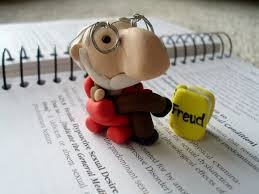 From hidden desires to public relations, from subliminal advertising to lifestyle marketing, from consumerism to politics this BBC documentary is a must-see for all marketers. The Century of Self is a four-part examination of how Freudian-informed strategies adopted by marketers and politicians have for the better part of a century manipulated mass consumer and voting behavior by appealing to our unconscious hopes and fears.
 btsite
You must be logged in to post a comment.